What is an agent?
LLMs and Chatbots are familiar concepts, but how do agents differ?
Evolution of AI Interfaces
The current mainstream concept of AI is largely centered around chatbots like ChatGPT. This is reminiscent of the early days of the Internet when browsers dominated discussions, despite the technology's broader scope. Similarly, while chat interfaces are prominent now, the AI landscape will evolve to include diverse server-side applications.
Developers have realized that these models can make generalized decisions when given sufficient context. As a result, they've been engineering prompts and creating frameworks to harness this emergent decision-making ability. This approach allows for control of server-side applications, particularly in cases where decisions aren't discrete.
I believe this space is new and emerging, but it is what I am devoting time to as I see great benefits here as the foundation models and open source options progress.
Key Characteristics of AI Agents
Expert Insights: Andrew Ng on Agents
To better understand agents, let's look at a recent explanation by AI expert Andrew Ng.
Specifically, he has a couple of slides and points that encapsulate the explanation between timestamps 1:10 and 4:22.
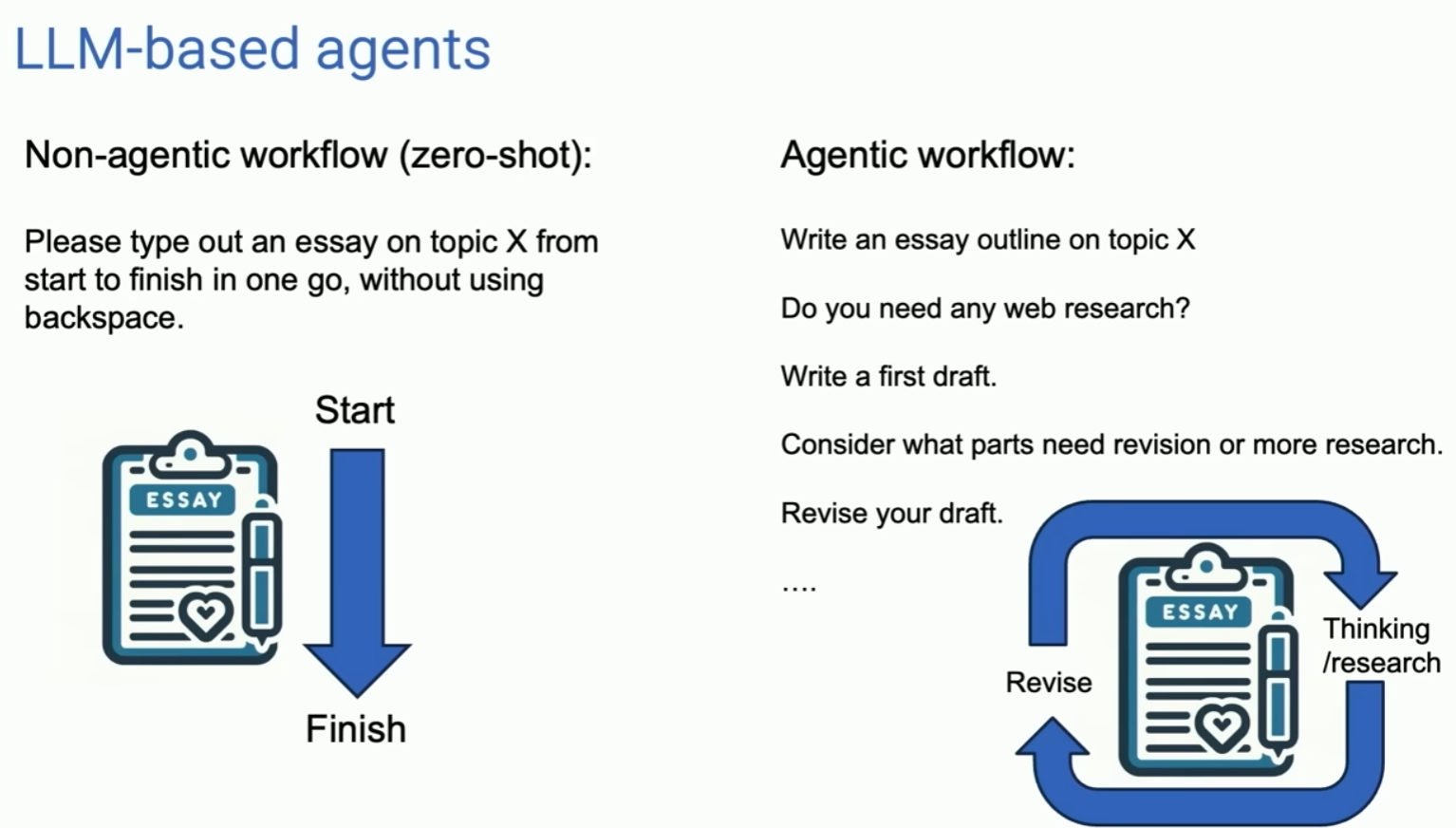
The following explains on the left how most people are using ChatGPT and how agents work, which includes a feedback loop.
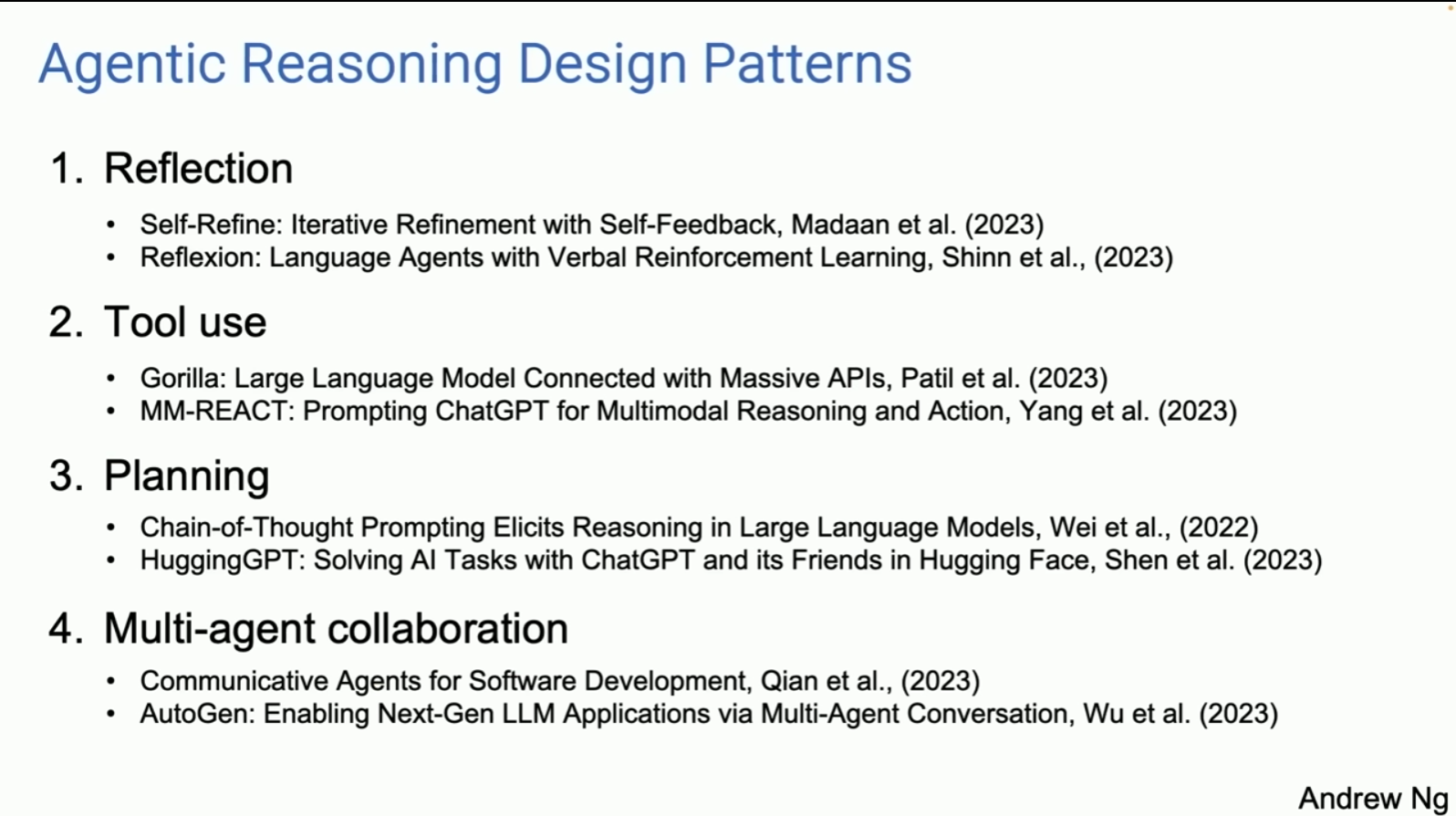
The following are the papers that bolster the agentic direction of LLM capabilities. I’ve been following all of these papers as they have been released and seeing the same patterns emerging - albeit slowly.
Agents are Important Accelerators
Recently, Leopold Aschenbrenner published a thought-provoking manifesto about the trajectory of AGI and ASI. It mentions agentic technology (although in rather dark terms) as a key part of the current state of progress in gaining value from LLMs. He refers to it as 'unhobbling gains’ his paper, Situational Awareness.
Recent Advancements: Claude 3.5 Sonnet
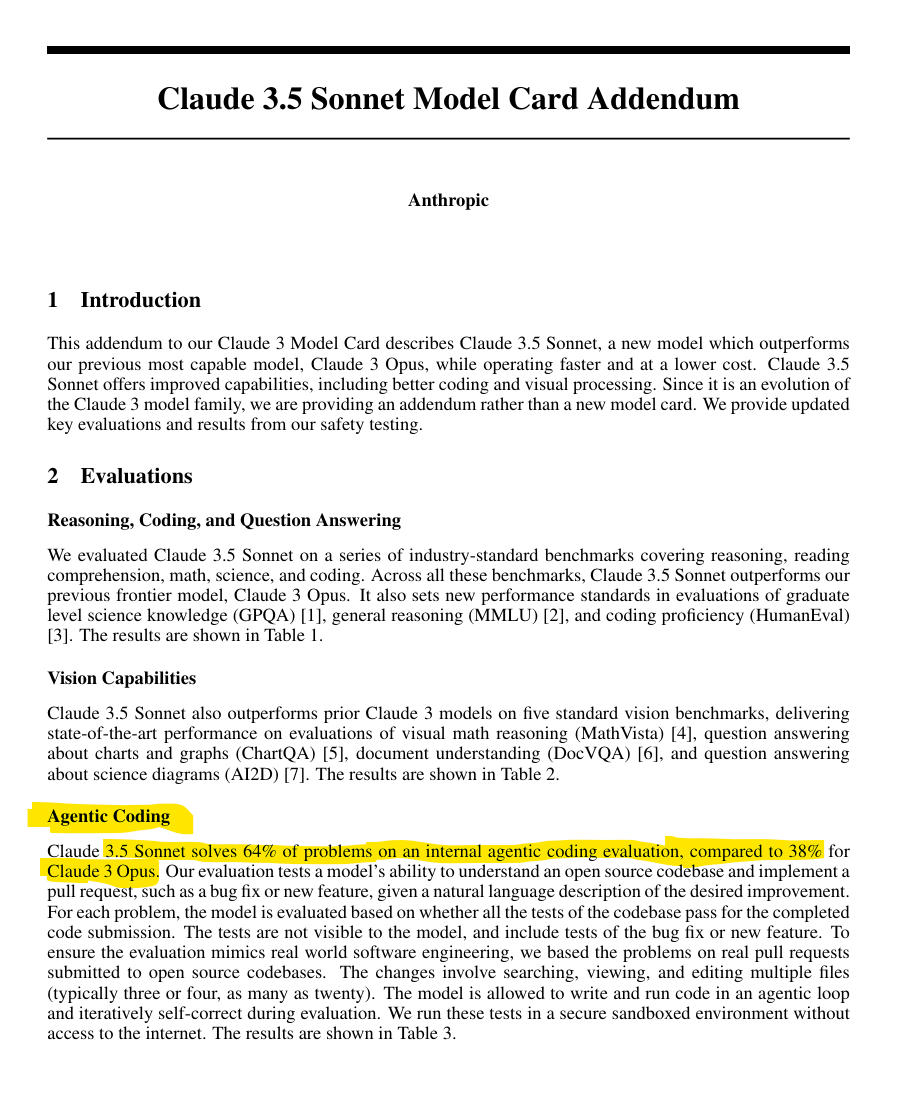
Recently Claude 3.5 Sonnet was released to much fanfare, and it is well deserved, it sets the new bar for foundation models. The team at Anthropic is watching the agentic space closely, and to me - this means that they are training the models to specifically be good at this type of workflow.
On the first page of the “Model Card Addendum” PDF for the Sonnet 3.5 release, they mention the internal agentic testing and how the rate of success jumped between Claude 3 Opus and Claude 3.5 Sonnet - from 38% to 64% of GitHub Issue level complex coding problems.
Conclusion
By enhancing LLMs with capabilities like planning, decision-making, and environmental interaction, we're unlocking new potential to address novel challenges and reimagine solutions to existing ones. As exemplified by advancements like Claude 3.5 Sonnet's improved performance on complex tasks, AI agents are not just a theoretical concept but a rapidly developing technology with tangible benefits.